A university-based neutron facility that provides world-class neutron measurement capabilities for addressing key scientific questions about materials at the atomic scale, while also dedicating efforts to the training and education of students and research staff, and serving as a vital resource for industries, national laboratories, and academic institutions.

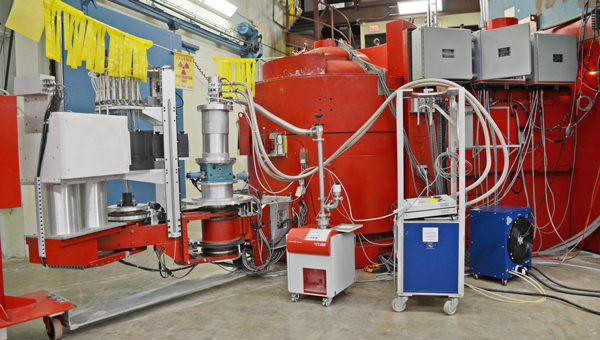
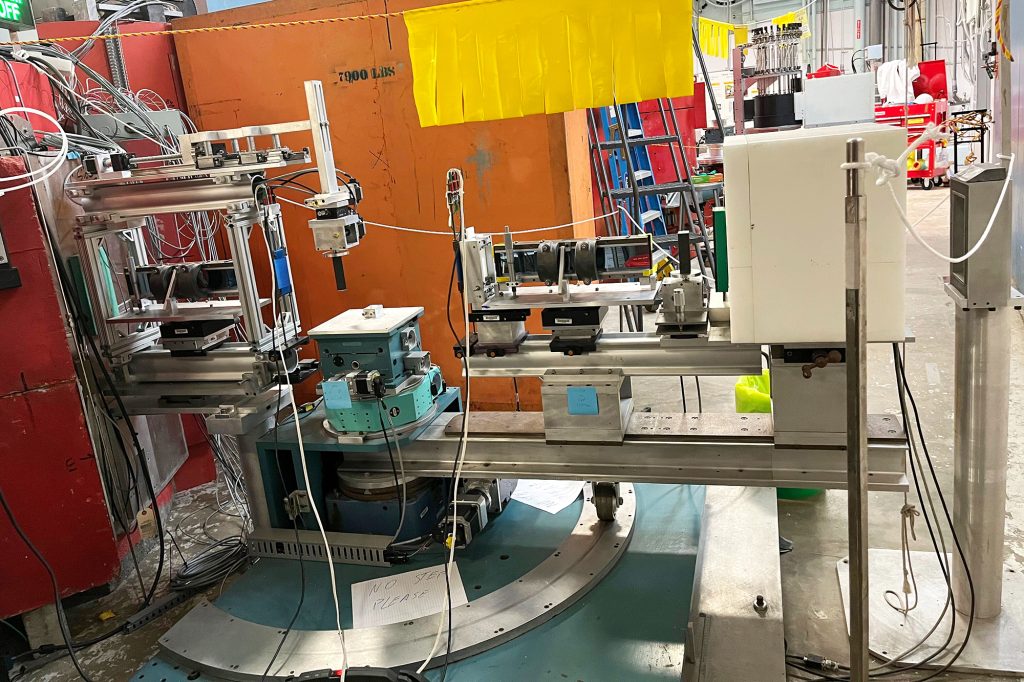
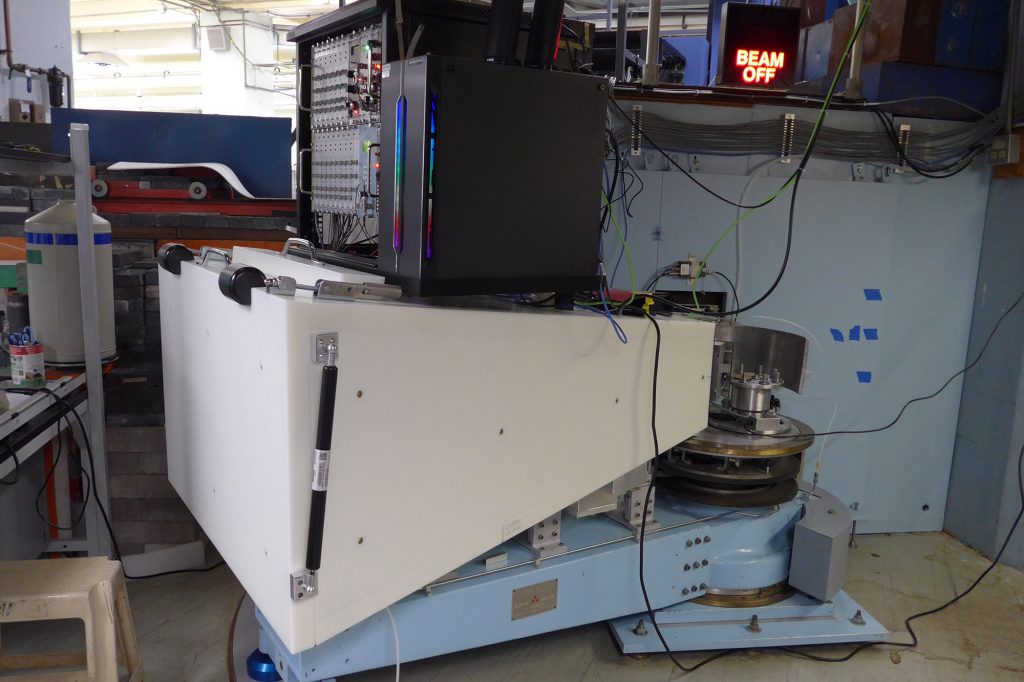
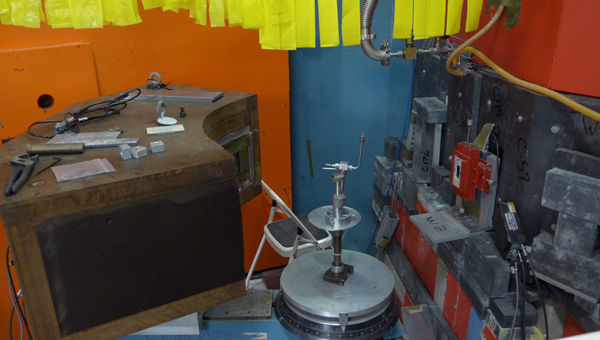
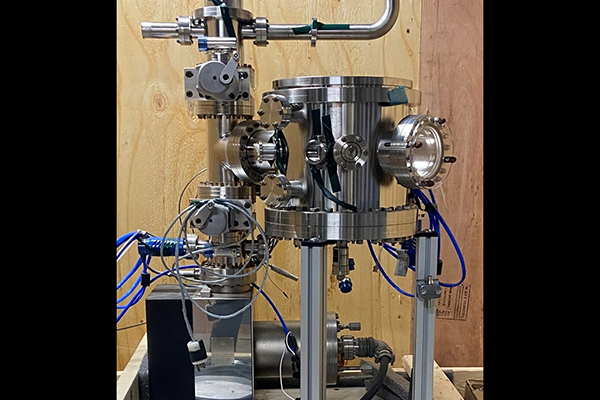
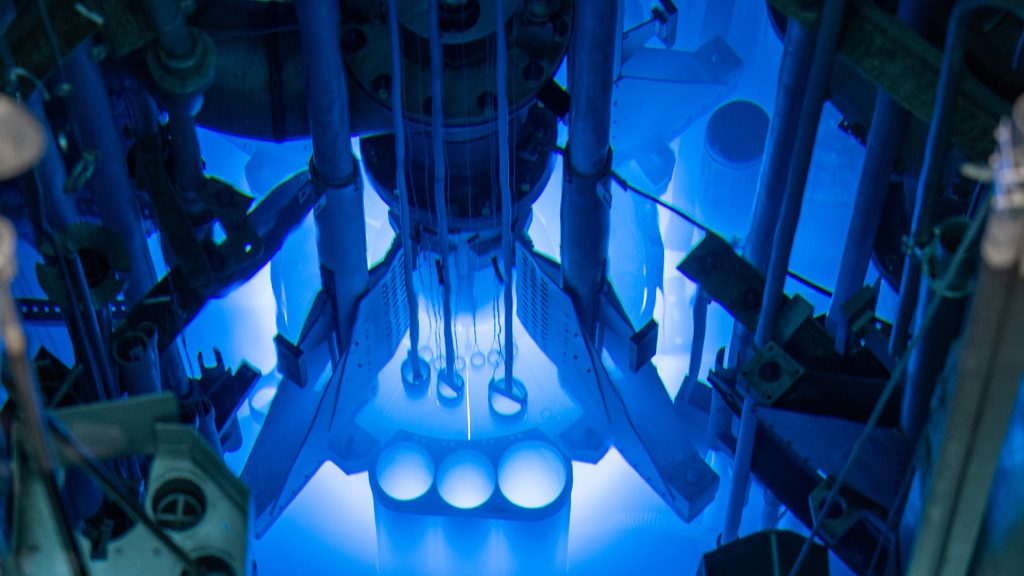
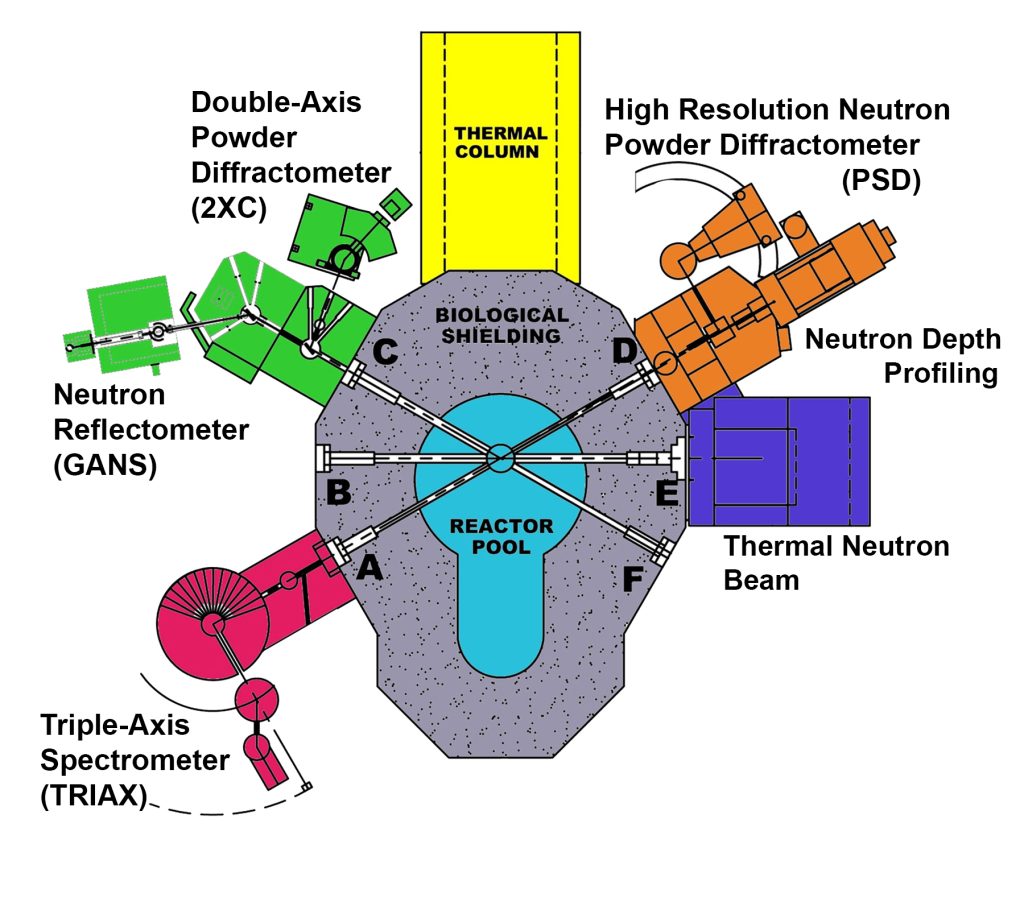
At 10 MW thermal power, MURR is the largest neutron source on a university campus in the United States and is well suited for neutron scattering research. The Neutron Scattering Group at MURR operates four distinct instruments for studying the structure and dynamics of matter. This suite of instruments consists of a triple-axis spectrometer (TRIAX), a neutron reflectometer (GANS), and two powder diffractometers (PSD and 2XC). The first two are unique in a university setting in the U.S. Scientists at MURR are also developing instrumentation for Neutron Depth Profiling.
Neutrons are invaluable probes for studying condensed matter due to their wave-particle duality. Slow-moving neutrons are especially effective for examining the structure and dynamics of materials because their wavelength is similar to the interatomic spacing in condensed matter, and their energy matches the characteristic vibrations of these materials.
Neutrons complement other scattering methods, such as optical, X-ray, and electron scattering, but possess unique properties that make them the preferred method for investigating certain materials, particularly hydrogenous and magnetic materials.
How can neutrons be used for research?
- Highly penetrating: Neutrons have no electric charge and, thus, penetrate easily through bulk materials, such as ½” steel.
- Non-destructive: Neutron measuring techniques are non-destructive, and, therefore, can be used on delicate biological samples without causing sample degradation.
- Interaction with nucleus: Neutrons interact via the strong nuclear force with the nucleus of an atom, making neutron scattering dependent on the isotope. This allows neutrons to distinguish light atoms in the presence of heavy atoms and also distinguish between neighboring elements in the periodic table, because the scattering cross sections of neighboring atoms are often substantially different.
- Contrast variation by isotope substitution: Isotopes of the same element can have significantly different neutron scattering lengths, enabling the use of “isotopic substitution” to gain structural and dynamic details of a system without changing its chemical composition. This technique is commonly applied in H/D substitution in hydrogenous materials (such as polymers and biological structures), a method known as contrast variation.
- Magnetic dipole moment: When neutrons interact with magnetic atoms or ions, a magnetic dipole interaction occurs between the neutron’s magnetic moment (µ) and the atom’s or ion’s magnetic field. Therefore, neutron scattering is an excellent tool for studying magnetic materials and structures.
- Excitations: Since the energy of neutrons is comparable with the energy of vibrational excitations (phonons or lattice vibrations in a crystal) and magnetic excitations (magnons or spin density waves in magnetic crystals), neutrons can gain or lose energy, which can be measured using inelastic neutron scattering.